"He knows the commands. He just doesn't listen." Owners tell us this constantly — about everything from 8-week-old shepherd puppies to settled adult doodles.
Here's the truth: your dog isn't blowing you off. Your dog was never actually taught the thing you think you taught.
Dogs don't generalize
"Sit" in your quiet kitchen and "sit" at a packed park are two different skills. Dogs learn commands bundled with the environment they learned them in — same room, same person, same treat pouch. Change the setting, add a squirrel, and you've changed the question entirely.
The reward math problem
Outside, you're competing with the most interesting show on earth. A treat can't outbid a squirrel at Rancho San Rafael or a jackrabbit on a Peavine trail. This is why our system is built on attention first — a dog that's genuinely tuned in to you doesn't have to choose between you and the environment, because you're not background noise anymore.
What real-world training looks like
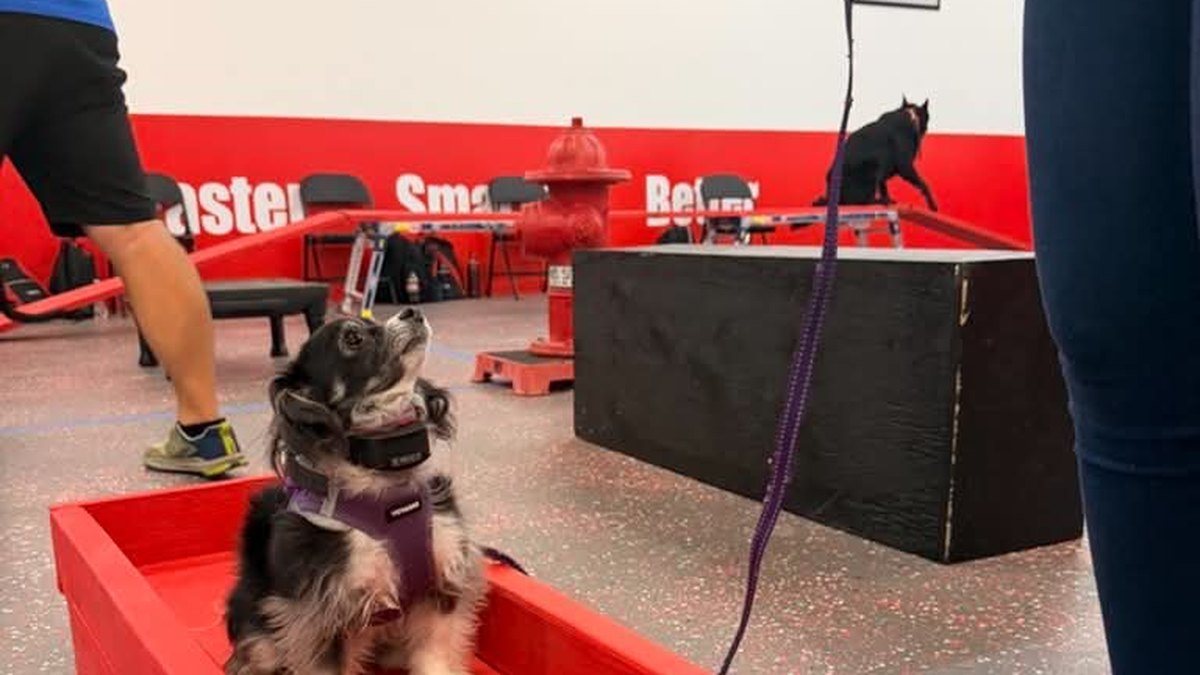
This is the heart of our high-distraction obedience work: the same command, proofed under escalating real-life distraction — other dogs, people, noise — until it holds everywhere. It's the difference between a trick and obedience. And it matters most for recall: a "come" that works 80% of the time is a suggestion, and between open trails and busy streets, the missing 20% is where dogs get hurt. Off-leash reliability isn't a bonus feature of our training. It's the point — it's literally what "sit means sit" means.
Bring your selective listener to a free evaluation. We'll show you the difference between knowing a command and obeying it.